
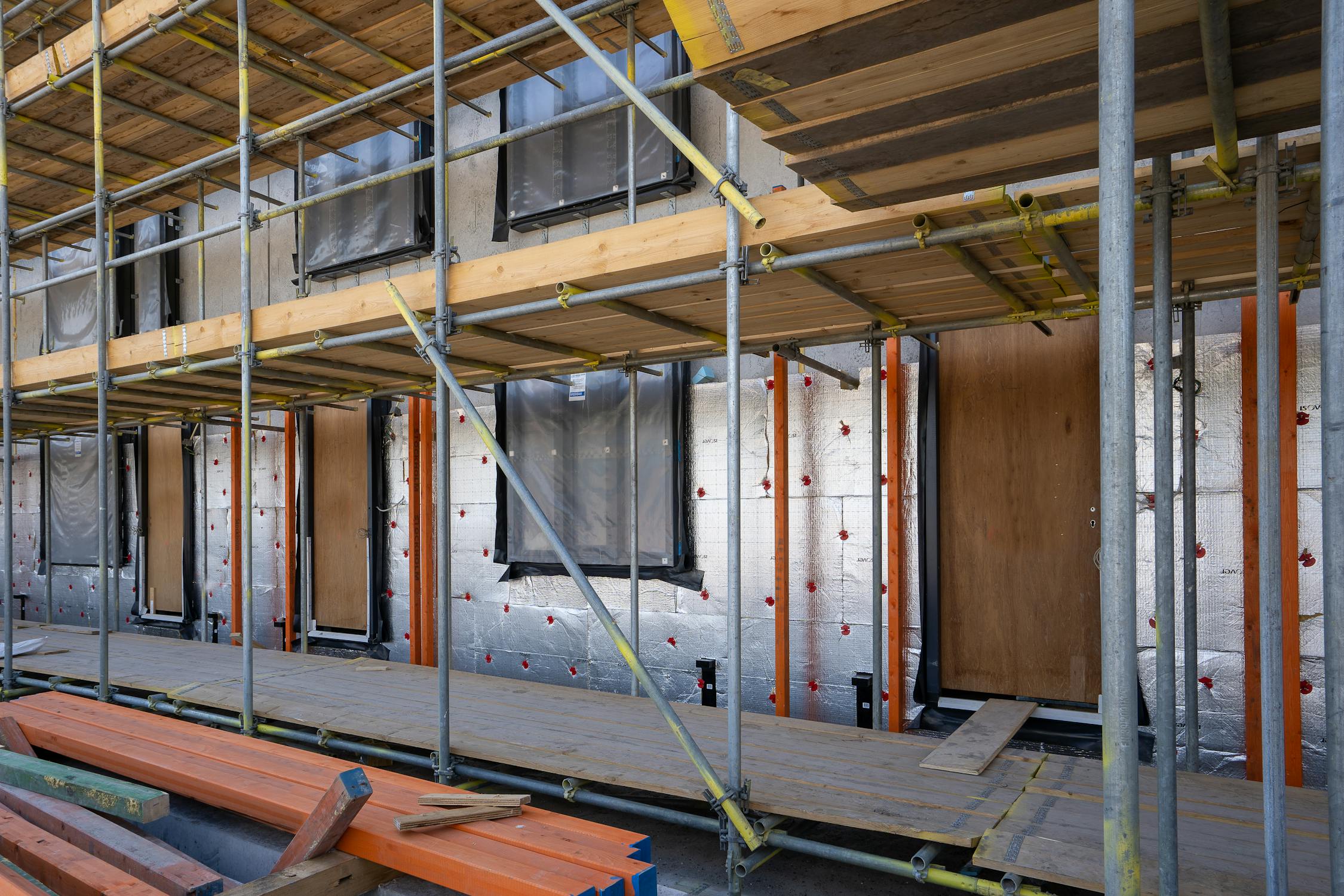
What Are SIP Structures?
Structurally Insulated Panels (SIPs) are high-performance building panels used in floors, walls, and roofs for residential and light commercial construction. A SIP consists of an insulating foam core—typically expanded polystyrene (EPS)—sandwiched between two structural facing boards, most commonly oriented strand board (OSB). SIPs are popular for their exceptional thermal performance, rapid installation, and structural efficiency. They produce exceptionally well-insulated, airtight building envelopes that significantly reduce energy consumption compared to conventional framed construction.
However, when SIP construction extends below grade—in basement foundations, below-grade mechanical rooms, or earth-sheltered structures—the unique material composition of SIP panels creates waterproofing challenges that standard systems cannot adequately address. Hulk Systems has developed a purpose-built solution for this exact application. Learn more about our SIP waterproofing system.
Below-Grade Waterproofing Challenges With SIP Structures
Cementitious Sheathing Joints
Some SIP systems use cementitious sheathing (fiber cement board) rather than OSB for the structural facing layers, particularly in below-grade applications where moisture resistance is a concern. Cementitious sheathing is more water-resistant than OSB, but the joints between panels—filled with tape, foam, or sealant—remain vulnerable. A waterproofing system that bridges these joints with a continuous, monolithic membrane is essential. Sheet membranes struggle with joint bridging, as the pre-formed sheets cannot fully conform to the depth and geometry of panel-to-panel joints. Spray-applied composite waterproofing flows into joints and cures as a continuous film, fully bridging the joint without bridging voids or thin spots.
OSB Exposure and Moisture Absorption
When standard OSB-faced SIP panels are used in below-grade applications, the OSB facing is extremely vulnerable to moisture. OSB absorbs water, swells, delaminates, and loses structural integrity when exposed to soil moisture over time. A waterproofing system applied to an OSB-faced SIP panel must bond aggressively to OSB and provide a completely watertight barrier before the panel is backfilled. Traditional peel-and-stick membranes frequently fail on OSB substrates due to poor adhesion to the rough, fibrous surface—and any adhesion failure allows moisture behind the membrane where it begins degrading the OSB immediately.
Underground Panel Connection Details
The connections between SIP panels, between SIP panels and concrete footings, and at transitions to above-grade framing are complex geometries that require careful waterproofing detailing. These transitions are the highest-risk zones in any below-grade SIP assembly. Spray-applied composite waterproofing coats these transitions continuously, maintaining full membrane thickness through corners, intersections, and changes in plane that would challenge any sheet membrane installation.
Traditional Waterproofing Failures on SIP Substrates
The construction industry has significant documented experience with peel-and-stick membrane failures on SIP below-grade applications. The typical failure sequence: membrane is installed on OSB-faced SIP panels, adhesion appears adequate initially, but within one to three seasons the OSB begins absorbing moisture through minor adhesion voids, the OSB swells and the membrane begins to lift, water migrates behind the membrane, and the OSB panel facing begins to delaminate. By the time the failure is visible—efflorescence on interior walls, wet floor, or visible mold—significant structural damage may have already occurred to the SIP panel.
Our semi-flexible mastic is another Hulk Systems product designed for challenging transition details where flexible waterproofing is needed at material interfaces.
How the Hulk Systems SIP Waterproofing System Addresses Each Challenge
The Hulk Systems SIP waterproofing system is a composite application specifically engineered for the unique challenges of below-grade SIP construction. The acrylic membrane bonds chemically to both OSB and cementitious sheathing surfaces, developing adhesion values that far exceed the performance of pressure-sensitive sheet membrane adhesives. The spray application flows into panel joints and seams, creating a monolithic, jointless barrier. The SRT textile reinforcement bridges panel joints under movement without membrane failure. And the impact protection course protects the system during backfill operations.
Installation Process
Hulk Systems certified installers apply the SIP waterproofing system in a single mobilization: surface preparation, spray application of the acrylic membrane, SRT textile embedment, top-coating, and protection course application. The entire sequence is typically completed on a residential SIP foundation in one day. No waiting for adhesive cure, no lap seam preparation, no slow, weather-sensitive installation process. The result is a complete, factory-quality waterproofing system applied in the field with predictable, consistent results.
Find a Hulk Systems Dealer Near You
Hulk Systems certified installers are active across North America and experienced with SIP below-grade waterproofing applications. If you are building with SIP panels and need a waterproofing system you can trust, we can connect you with a qualified dealer in your region.
Find a dealer at hulksystem.com/supplier-locator or call 1-833-485-5797. Hulk Systems · hulksystem.com · 1-833-485-5797 · Evolved Composite Waterproofing